
If you are thinking about selling a home in Charlotte, Davidson, Cornelius, Mooresville, Huntersville, or Statesville, the question I hear most is simple: what will I actually walk away with? Most sellers can guess their sale price. Far fewer can guess their costs, and a new national study says those costs are bigger, and rising faster, than most people expect.
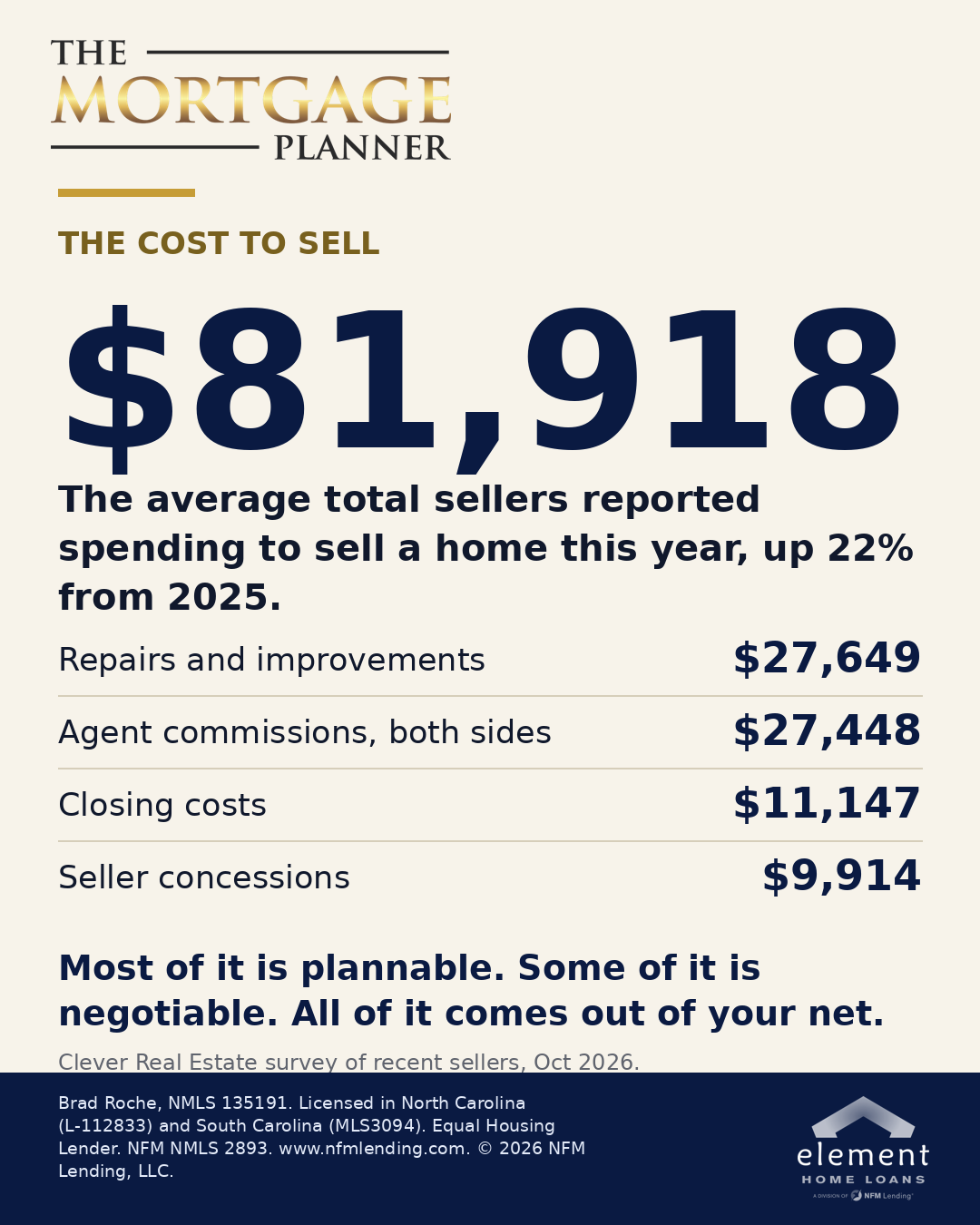
Clever Real Estate surveyed 1,000 Americans who sold a home since 2024 and released the results on October 27, 2026. Sellers reported spending an average of $81,918 to sell their home. That is up 22% from the $67,245 average in the 2025 version of the same study. Nearly half of sellers, 46%, said selling cost more than they expected, and 24% took on debt just to cover the costs of selling.
Where the $81,918 goes
The biggest piece was repairs and improvements, at an average of $27,649, up 32% from the year before. Sellers are spending real money getting homes ready, fixing what inspectors will find anyway, and competing with polished listings.
Agent commissions came next. The study estimated combined buyer and seller agent commissions at $27,448, based on an average rate of 5.46%.
Closing costs averaged $11,147. Seller concessions averaged $9,914, and 78% of sellers offered them. In a market where buyers carry high rates and tight budgets, concessions have become a standard part of the deal, not an exception.
There is a bright side in the same study. Four in 5 sellers still turned a profit, averaging $191,304. But 39% of them said the profit was smaller than they expected. That gap, between the profit sellers pictured and the profit they got, is almost always a planning gap, not a price gap.
What this number does not mean
Before you run with the headline, here is the honest caveat. These are self-reported survey figures from sellers across the country, not a closing statement average and not a Charlotte number. Your cost to sell depends on your sale price, your home's condition, the commission you negotiate, and the deal you accept. A well-kept home in Cornelius will not cost what a deferred-maintenance home in Statesville costs. Treat $81,918 as a wake-up call to budget, not as a quote.
The costs you can actually influence
You cannot control everything on the list. You can control more of it than most sellers realize, especially if the work starts before the listing goes live.
Repairs: spend on purpose, not on panic. Repairs and improvements were the largest average cost in the study, and the easiest place to overspend. Not every dollar you put into a house comes back at closing. The dollars that protect your net are the ones aimed at what buyers and inspectors punish most: safety items, water intrusion, tired mechanicals, and anything that will show up as a red flag in the first ten minutes of a showing. Get quotes before you list, decide what is a repair and what is a credit, and price with your eyes open. A pre-listing plan beats a mid-contract surprise every time.
Concessions: aim the dollars at the buyer's real problem. Concessions averaged $9,914, and most sellers now expect to offer something. The mistake is treating a concession and a price cut as the same tool. A price cut lowers your net and the buyer's loan by roughly the same dollars. A concession aimed at the buyer's financing, such as help with closing costs or a rate buydown, can move the buyer's monthly payment further in the early years of the loan, which is often what makes the deal work at your price. Same money out of your pocket, very different result at the table. That math should be run on every offer, before you answer it.
Pricing: the first price is a strategy, not a hope. An overpriced home sits, and sitting homes invite bigger asks on everything else: bigger concessions, bigger repair credits, bigger price cuts later. Price to the market you are in, and you keep leverage on every other line of the deal.
Timing: carrying costs are real costs. Every extra month on the market is another month of mortgage, taxes, insurance, and upkeep, plus the risk that your next purchase gets harder to time. A clean launch usually beats a slow drip of reductions.
Plan the purchase alongside the sale
For most of my clients around Lake Norman, selling is only half the move. The other half is the next mortgage, and the two sides connect. Your net from the sale decides your down payment. Your closing dates decide whether you need bridge thinking or a double move. Your new loan should be structured before your old house is under contract, not after.
That is the conversation I have with sellers in Davidson, Charlotte, and Mooresville every week: one plan that covers what the sale will really cost, what you will really net, and how the next home gets financed on the other side of it. If you want the education version of that plan, Mortgage Planner University is free and covers selling and buying in one course: themortgageplanner.com/mpusignup. More local breakdowns like this one live in the Journal: themortgageplanner.com/journal.
Selling in 2026 does not have to be a surprise. Run the numbers first, and the $81,918 headline becomes a budget instead of a shock. Start your plan at themortgageplanner.com.
Brad Roche, The Mortgage Planner NMLS 135191. Licensed in North Carolina (L-112833) and South Carolina (MLS3094). Equal Housing Lender. NFM NMLS 2893. www.nfmlending.com. © 2026 NFM Lending, LLC.
Quick questions
Will it cost me $81,918 to sell my home in Charlotte? Probably not exactly. That figure is a national average from a survey of recent sellers, and it is self-reported. Your cost depends on your price, your home's condition, your negotiated commission, and the terms you accept. The right move is to build your own net sheet before you list.
What is the biggest cost sellers underestimate? Repairs and improvements. In the study they averaged $27,649, the single largest category, and they rose 32% in a year. Sellers who quote the work early and choose repairs on purpose spend with a plan. Sellers who wait for the inspection report spend under pressure.
Should I plan on offering concessions? Most likely yes. In the study, 78% of sellers offered concessions averaging $9,914. The question is not whether to offer something, it is how to aim it. A concession pointed at the buyer's financing problem often protects your price better than an equal price cut. Run both versions of the math before you respond to an offer.
When should I start planning a sale? Before the sign goes in the yard. The sellers who protect their net decide the repair list, the pricing strategy, the concession budget, and the financing on their next home while they still have time and leverage. Once you are under contract, most of those decisions get made for you.